Worrying about a big repair bill for your RV refrigerator can definitely put a damper on your travel plans. Getting a handle on the potential costs upfront, though, makes the whole process a lot less stressful.
On average, a full RV refrigerator replacement will run you anywhere from $1,200 to $4,000, including both the new fridge and professional installation. But that price can swing wildly depending on the type of fridge you choose, your RV’s specific layout, and whether you decide to roll up your sleeves and do the job yourself.
Understanding Your Potential Replacement Costs
When your RV fridge finally calls it quits, the first question is always: "How much is this going to set me back?" The total expense isn't just the price tag on the new unit. It's a mix of the appliance itself, the labor to get it installed, and any little extras like modifications or special parts.
A big part of figuring out the cost is deciding if a replacement is even the right move in the first place. For some folks, a repair might make more sense. It's always a good idea to start by analyzing whether to repair or replace your appliance to make sure you're not spending money you don't have to.
If replacement is the answer, a few key things will drive the final price:
- Type of Refrigerator: A basic absorption model is going to be way easier on the wallet than a fancy residential-style fridge.
- Installation Complexity: If it's a simple swap, the job is quick and pretty affordable. But if your technician has to start modifying cabinets to make the new one fit, those labor hours will add up.
- DIY vs. Professional: Tackling the installation yourself can save you over $1,000 in labor costs, but it’s not a job for a beginner. You'll need the right skills and a specific set of tools.
A Quick Glance at the Numbers
Just looking at the price of a new unit, you'll see a huge range. A basic, no-frills RV fridge might only be $400, while a high-end residential model for a luxury coach could top $6,000.
Labor costs are just as varied. A straightforward replacement might only take a technician an hour or two. A more complex job, on the other hand—one that involves removing a window to get the old fridge out and the new one in—could easily stretch to 10 hours of work.
To give you a clearer picture of how these costs can stack up, I've put together a quick breakdown. This table will help you see how different scenarios affect the bottom line.
Estimated RV Refrigerator Replacement Cost Breakdown
This table gives you a ballpark idea of what to expect. It breaks down the potential costs for the fridge itself, labor, and any extra parts you might need for different types of installations.
| Expense Category | Low-End Estimate (Basic DIY) | Mid-Range Estimate (Standard Pro Install) | High-End Estimate (Complex Install) |
|---|---|---|---|
| Refrigerator Unit | $400 – $800 | $1,000 – $2,500 | $2,500 – $6,000 |
| Labor Costs | $0 (DIY) | $300 – $750 | $750 – $1,500+ |
| Additional Parts | $50 – $150 | $100 – $300 | $200 – $500 |
| Total Estimated Cost | $450 – $950 | $1,400 – $3,550 | $3,450 – $8,000+ |
Keep in mind these are just estimates. Your final bill will depend on your specific RV, the model you choose, and local labor rates. The rest of this guide will dig deeper into what drives these numbers.
Breaking Down the Core Cost of Your New RV Fridge
When you start adding up the numbers for an RV refrigerator replacement, one line item will always stand out: the refrigerator unit itself. This is where the biggest chunk of your budget is going, and really understanding the different options is key to making a smart investment that fits your travel style and your wallet.
Think of it like choosing the engine for your RV's kitchen—each type comes with a different balance of power, efficiency, and cost.
The price of a new RV refrigerator can swing wildly depending on its technology, size, and features. You can find basic models starting around $1,000, but don't be surprised to see high-end units climb to $3,000 or more. These are specialized appliances built for life on the road, which means they're smaller but often more expensive than what you'd find in a house. If you've ever wondered why RV-specific parts cost more, you can get the full story on the unique costs of RV repairs and parts.
To give you a clearer picture, this diagram shows how your total bill splits between the unit, labor, and any extra parts needed for the job.
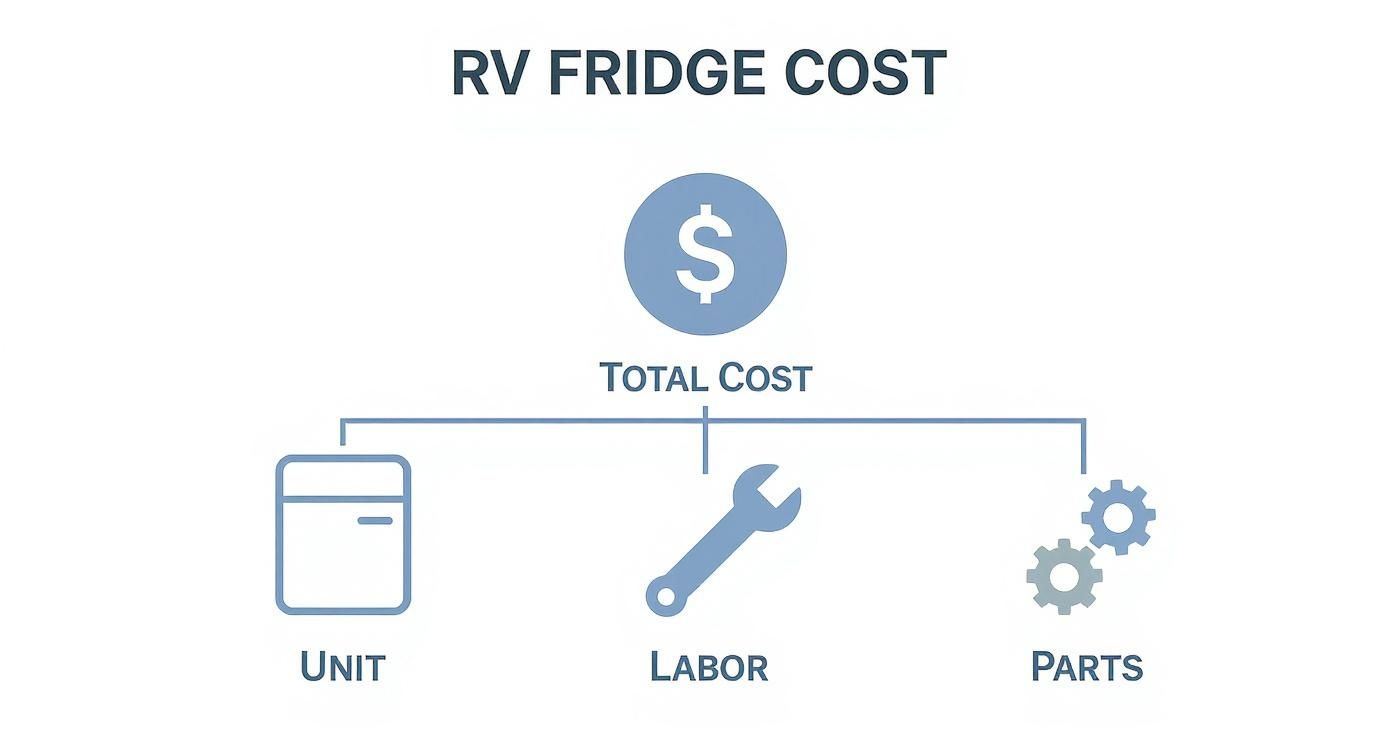
As you can see, the fridge itself is the main event. That makes your choice of which type to buy the single most important financial decision in this whole process.
The Three Main Types of RV Refrigerators
There are really three major players in the RV fridge game: absorption, 12V compressor, and residential models. Each has its own price tag and a unique set of pros and cons that work better for different kinds of RVers. I've seen them all in action, and picking the right one comes down to how you camp.
To help you decide, here's a quick comparison of what you can expect from each type.
RV Refrigerator Price Comparison by Type
| Fridge Type | Average Unit Cost | Key Advantages | Key Disadvantages |
|---|---|---|---|
| Absorption | $1,200 – $2,500 | Runs on propane (great for boondocking), completely silent operation. | Needs to be level to work properly, struggles in very hot weather. |
| 12V Compressor | $1,500 – $3,000+ | Fast, consistent cooling (like a home fridge), not affected by leveling or outside temps. | Higher upfront cost, relies heavily on your battery and solar setup. |
| Residential | $1,000 – $2,000 | Largest capacity, modern features (ice/water), most affordable for its size. | Requires a powerful inverter and large battery bank, often needs cabinet modifications. |
Let's dig a little deeper into what these differences mean out on the road.
1. Absorption Refrigerators (2-Way and 3-Way)
Think of an absorption fridge as the silent, versatile butler of the RV world. It uses a heat source—either propane or electricity—to kick off a chemical reaction that makes things cold. Since there are no moving parts, it's dead quiet, which is a massive plus if you're a light sleeper.
- 2-Way Models: These are the old standard, running on either propane (LP gas) or 120V AC shore power. They're perfect for boondockers who want to save every last amp of battery power.
- 3-Way Models: These add a 12V DC power option, letting you run the fridge off your RV’s battery while driving without having to leave the propane on.
Absorption models are usually the most budget-friendly upfront. The tradeoff? Their cooling power can drop off in really hot weather, and they absolutely must be level to function correctly.
2. 12V Compressor Refrigerators
A 12V compressor fridge is like an efficient marathon runner for your RV’s electrical system. It works exactly like the one in your kitchen at home but is engineered to run straight from your 12V batteries. These have become incredibly popular, especially for RVers who've invested in solar.
Key Takeaway: Compressor fridges give you quick, consistent cooling that doesn't care about the outside temperature or whether your rig is perfectly level. They get cold fast and stay cold reliably, which is a huge win for food safety.
The main downside is the higher initial cost and their total dependence on your battery system. If you don't have a solid solar setup or a big battery bank, you'll be watching your power usage like a hawk on long off-grid trips.
3. Residential Refrigerators
For those with big Class A motorhomes or fifth wheels who value space and features above all else, a residential fridge is a pretty tempting upgrade. These are the same models you’d buy for a house, offering the most capacity, modern perks like ice makers, and fantastic cooling.
The catch is they need 120V AC power all the time. This means you'll need a hefty inverter and a serious battery bank to keep one running while you're boondocking.
How Features and Finishes Affect the Price Tag
Beyond the core technology, a few other things can tack a surprising amount onto the cost of your new fridge. Just like buying a car, adding the premium options will drive up the final price.
- Size and Capacity: This one's simple—the bigger the fridge, the more it costs. Capacity is measured in cubic feet, with smaller units hovering around 4-6 cu. ft. and the big boys reaching 16 cu. ft. or more.
- Ice Makers and Water Dispensers: These are great conveniences, but they add complexity and cost to both the unit and the installation process.
- Smart Technology: Some of the newest fridges come with fancy digital displays, precise temperature controls, and even Bluetooth apps for monitoring. All that tech comes at a price.
- Finishes and Materials: A standard black or white finish is the most affordable. If you want that sleek stainless steel or black glass look, expect to add $100 to $300 or more to the final bill.
Calculating Professional Installation and Labor Fees
Once you’ve picked out the perfect new fridge, the next big piece of the rv refrigerator replacement cost puzzle is the professional installation. While the appliance itself is the main expense, labor fees can add a significant chunk to your final bill, so it’s important to know what you're paying for.
Think of it like hiring a specialized mechanic versus a quick-lube tech. Swapping an RV fridge isn't just a matter of plugging it in. It takes a pro who knows how to handle electrical wiring, propane lines, and custom carpentry—all within the tight confines of a motorhome.

Standard Labor Rates for RV Technicians
First things first, RV technicians are skilled professionals, and their hourly rates reflect that expertise. You can generally expect to pay somewhere between $125 and $200 per hour for their time. The final rate often depends on where you are in the country and whether you’re at a dealership or using a mobile RV repair service.
That hourly rate covers a lot more than just the technician's time on your rig. It accounts for their training, specialized tools, insurance, and the general cost of running their business. This is why professional installation buys you peace of mind—you're paying for a job done safely and correctly the first time.
Simple Swaps Versus Complex Installations
Not all installations are created equal. The total time—and therefore the total labor cost—really comes down to the complexity of the job. Installations generally fall into two camps.
-
Simple Swap (1-3 hours): This is the best-case scenario. It means your new fridge is the same type and nearly the same size as the old one. The tech can slide the old unit out, hook everything up, and slide the new one in with minimal fuss.
-
Complex Installation (4-10+ hours): This is where costs can start to climb. A complex job involves extra steps that add serious hours to the clock. For instance, switching from a gas absorption fridge to a residential model almost always requires significant cabinet modification to make it fit.
Real-World Scenario: I’ve seen some wild installations where the new refrigerator won't even fit through the RV's entry door. Technicians sometimes have to remove a large window or even the windshield to get the old unit out and the new one in. A maneuver like that can easily tack on an extra 5-6 hours of labor to the project.
Figuring out which category your replacement falls into is the key to getting an accurate estimate and avoiding sticker shock when the final bill arrives.
Uncovering Overlooked Service Charges
Beyond the hourly labor rate, there are a few other common fees that can pop up on your service invoice. These are all legitimate charges for necessary parts of the job, but they can be a surprise if you aren't expecting them.
Here’s a quick rundown of what else you might see:
-
Diagnostic Fee: If you have a technician come out first to see if your old fridge can be repaired, you'll likely pay a diagnostic fee of $100 to $200. This usually covers the first hour of their time and is sometimes waived if you decide to go ahead with the replacement.
-
Mobile Service or Call-Out Fee: If you use a mobile RV tech who comes to you (which is incredibly convenient), expect a call-out fee. This can range from $75 to $150 or more, depending on how far they have to travel to get to you.
-
Old Unit Disposal Fee: Getting rid of an old refrigerator isn't as simple as leaving it on the curb. Technicians have to dispose of them properly, especially absorption units that contain ammonia. This fee typically runs from $50 to $100.
-
Additional Parts and Supplies: Your estimate should also account for the little things, like new sealant, wiring connectors, propane fittings, or wood for cabinet modifications. These small but necessary items can add another $50 to $200 to the total cost.
By anticipating these extra charges, you can build a more realistic budget for your RV refrigerator replacement. My advice is to always ask for a detailed, itemized quote upfront that includes all these potential fees so there are no surprises when it’s time to pay.
The DIY Route: Can You Actually Save Money?
For the hands-on RVer, the idea of tackling a refrigerator replacement yourself is pretty tempting. When you cut out professional labor, you stand to make a serious dent in your total RV refrigerator replacement cost. The savings can be huge, ranging from a few hundred bucks for a simple swap to well over $1,500 if you can avoid the complex cabinet modifications a pro would charge for.
But let's be clear: this isn't a project for the faint of heart. Before you start unbolting your old fridge, you need to take a frank look at the skills, tools, and risks involved. A successful DIY job is more than just a money-saver; it’s a point of pride. A botched one, however, can quickly turn into a costly and downright dangerous mistake.
Assessing Your Skillset and Tool Chest
Going it alone requires a specific set of skills. This is not a beginner-level project, and being honest about what you can handle is the most important first step. You'll need to be comfortable with a lot more than just following a YouTube tutorial.
A successful DIY installation demands real proficiency in a few key areas:
- Precise Measurements: RVs are built with incredibly tight tolerances. You have to measure the existing cutout—height, width, and depth—with absolute precision. An error of even a quarter-inch can mean the new fridge simply won't fit, period.
- Basic Carpentry: If your new fridge isn't a perfect match for the old space (and they rarely are), you'll be modifying the cabinetry. This could involve cutting, framing, or building new supports to make sure the unit is secure and has the ventilation it needs to run properly.
- 12V DC and 120V AC Electrical Work: You must be able to safely disconnect the old unit and correctly wire the new one. This means understanding polarity, using the proper wire gauges, and securing all connections to prevent shorts or, worse, a fire.
- Propane Line Handling: If you're swapping out an absorption unit, you will be working with propane lines. This is the most critical—and most dangerous—part of the job. You have to know how to safely disconnect and reconnect LP gas lines, using two wrenches to avoid stressing the fittings, and then perform a leak test. No exceptions.
Safety First: A proper LP gas leak test is non-negotiable. After you reconnect the propane line, you must use a soapy water solution or a gas leak detector to check for bubbles at every connection point. Skipping this step puts you at serious risk of a gas leak and a potential explosion.
The Hidden Risks of a DIY Installation
The potential savings are tempting, but they come with significant risks that can wipe out any financial gain in a heartbeat. Before you commit to the DIY path, it’s worth understanding the advantages of professional appliance services over DIY, especially for a project that involves both gas and electrical systems.
Think about these potential pitfalls before you start pulling things apart:
- Voiding the Warranty: Many refrigerator manufacturers will straight-up void the warranty if the unit isn't installed by a certified technician. A small mistake on your part could leave you with a very expensive, non-functional appliance and no way to get it fixed or replaced.
- Damage to Your RV's Interior: Getting a heavy, awkward refrigerator in and out of an RV is tough. I’ve seen it go wrong. One slip can lead to scratched floors, gouged cabinets, or torn upholstery. Technicians have specialized dollies and the experience to avoid this kind of collateral damage.
- Improper Sealing and Ventilation: This is a big one for absorption fridges. They require precise sealing to prevent deadly carbon monoxide from seeping into your living space. They also need very specific clearances for ventilation to function correctly. Getting this wrong is not only dangerous but will also cause the fridge to perform poorly, if at all.
- The Catastrophic Leak: An improperly tightened propane fitting is a disaster waiting to happen. A slow leak can fill your RV with explosive gas. On the flip side, drilling into the wrong spot on the new fridge could puncture a refrigerant line, instantly destroying the unit and releasing harmful chemicals.
Ultimately, the decision to DIY your RV refrigerator replacement is a personal one that comes down to your skills, confidence, and tolerance for risk. If you have the right experience and the right tools, you can definitely achieve significant savings and have a great story to tell. But if you have any doubt at all, especially when it comes to handling those propane lines, hiring a professional is the safest and, quite often, the smartest investment you can make.
Smart Strategies to Lower Your Replacement Cost
That big price tag for a new RV fridge can be a tough pill to swallow, but don't just accept the first quote you get. With a bit of strategic planning and savvy shopping, you can shave a surprising amount off the final bill without cutting corners on quality. Think of this as your game plan for making the replacement as painless on your wallet as possible.

One of the simplest tricks in the book is to time your purchase right. Just like buying a car, refrigerator prices tend to dip during the off-season in late fall and winter. Demand is lower, and dealers are often eager to clear out last year's models, which is the perfect opportunity for you to snag a great deal.
Explore Alternative Purchasing Options
Don't get tunnel vision looking only for brand-new, still-in-the-box units. There are plenty of other places to find a perfectly good fridge for a fraction of the retail price. It might take a little more digging, but the savings can be huge.
- Ask About Scratch-and-Dent Models: I’ve seen plenty of RV dealerships and appliance stores with units that have minor cosmetic flaws—a small scuff on the side or a tiny ding on the door—that have absolutely no impact on how they work. These models are usually marked down by 10-20%.
- Check RV Salvage Yards: For older rigs, a salvage yard can be a treasure trove. You can often find a gently used, fully functional refrigerator pulled from a wrecked RV for just a few hundred bucks.
- Look for Online Resellers: Websites and forums dedicated to RVing are full of owners selling used refrigerators after they've upgraded. Just be sure to do your homework and verify the unit’s age and working condition before you hand over any cash.
The market for these appliances is surprisingly massive; in 2025, the global RV refrigerator market was valued at about USD 1.46 billion. That robust market means there are always units being bought, sold, and salvaged. You can discover more insights about the RV fridge market and its growth.
Think Long-Term and Bundle Services
Your savings strategy shouldn't end once you've bought the fridge. You can find even more savings by thinking about long-term costs and being smart about how you schedule your service.
Pro Tip: If your RV is already due for other maintenance, like a roof inspection or wheel bearing service, schedule it at the same time as your fridge replacement. Many service centers will reduce labor charges or waive mobile service fees when you bundle multiple jobs into one appointment.
It also pays to think ahead. Investing in a more energy-efficient model, like a modern 12V compressor fridge, might cost a little more upfront but can lead to real savings down the road. These units are incredibly efficient with battery power and can reduce how much you rely on propane, saving you money on every single trip.
Answering Your Top Questions About RV Fridge Costs
Even with all the numbers laid out, you probably still have a few questions rolling around in your head. I get it. This is a big purchase, and you want to be sure you're making the right call. Let's tackle some of the most common questions I hear from fellow RVers.
Repair or Replace? That’s the Big Question.
When your fridge starts acting up, the first instinct is to ask if it's cheaper to fix it or just buy a new one. I've been there. My go-to advice is the 50% rule.
If you get a repair quote and it’s more than half the cost of a brand-new, comparable fridge, it’s almost always smarter to replace it. Pouring a ton of money into an old unit is often just a temporary fix before something else breaks.
A couple of other things come into play here. How old is the fridge? If it's a 15-year-old model, finding parts can be a nightmare, and you're just throwing good money after bad. Also, what broke? A simple thermostat fix is one thing, but if the whole cooling unit has failed, that’s usually the nail in the coffin. Replacement is your best bet.
How Long Should an RV Refrigerator Last Anyway?
This really depends on the type of fridge you have and how well you've taken care of it. A traditional absorption refrigerator, the kind most of us have had for years, will typically give you 10 to 15 years of service if you treat it right.
The newer 12V compressor models are proving to be just as durable, sometimes even more so, because their mechanics are a bit simpler. No matter what type you have, the key to a long life is regular maintenance, making sure it has plenty of ventilation, and trying not to rattle its fillings out on washboard roads.
My Two Cents: I've seen 20-year-old fridges still running cold and 5-year-old ones that are toast. Age is just a number. If your older, well-maintained fridge is still cooling reliably, I'd hang onto it. A consistently performing old-timer is better than a newer, problematic one any day.
Can I Just Stick a Regular Mini-Fridge in My RV?
It’s tempting, I know. You see a mini-fridge on sale for a fraction of the price of an RV unit and think, "Why not?" But trust me on this one—it’s a bad idea.
Residential mini-fridges aren't built for life on the road. They can't handle the constant vibration and bouncing around, which leads to them failing way sooner than you'd expect. More importantly, they don't have the proper door latches, so you risk finding a salad explosion all over your floor after a bumpy stretch of road.
The biggest issue, though, is power. A standard mini-fridge is an energy hog on a 12V system and will drain your batteries in no time when you're boondocking. For safety, reliability, and your sanity, always stick with a refrigerator designed specifically for RVs.
Ready to find the perfect replacement for your rig? At RVupgrades.com, we stock a huge selection of top-brand RV refrigerators to fit every budget and travel style. Shop our complete collection of RV appliances today and get back on the road with confidence.