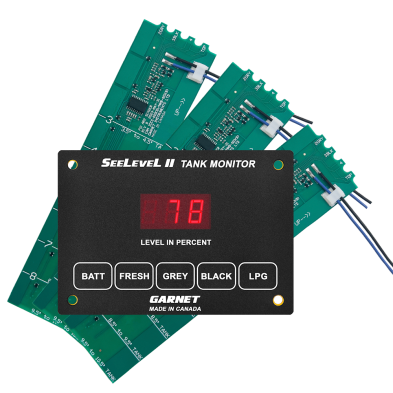
You flip the water pump switch and hear… absolutely nothing. No hum, no vibration, just dead silence. It’s a moment that can send a jolt of panic through any RVer. But before you start picturing a costly repair, take a breath. When a pump is completely silent, the fix is often something simple and easy to overlook.
Before you even grab your toolbox, let's run through a quick mental checklist of the usual suspects.
Quick Fixes For When Your RV Water Pump Is Silent
The culprit is often one of the multiple pump switches that modern RVs have for convenience. You might have one on the main control panel, another in the wet bay, and maybe even a third in a bathroom. It’s an easy mistake to forget one is off, especially when you're just getting set up at a new site. Do a quick walkthrough and make sure every pump switch you know of is in the 'ON' position.
Start with the Basics
First things first, your RV water pump is a 12-volt appliance. It runs directly off your house batteries. If your battery disconnect switch is off or your batteries are dead, that pump isn't going anywhere. A quick way to check this is to flip on a 12V light. If the lights are out, your pump will be too.
Next, the pump needs water to do its job. It sounds obvious, but you'd be surprised. Most pumps have a low-water sensor that shuts them down to prevent the motor from burning out. Always physically check your freshwater tank level indicator before you start troubleshooting anything else.
Pro Tip: If you’ve just de-winterized your rig or you ran the tank completely dry, you’ve probably got air trapped in the lines. This air pocket prevents the pump from building pressure. Simply open the faucet furthest from the pump (usually the kitchen sink or shower) and let the pump run for a few minutes. This is usually all it takes to purge the air and get things flowing again.
This flowchart breaks down those first three simple checks to run through when faced with a silent pump.

As you can see, working through these steps—power, switches, and water level—will solve the problem more often than not, all without needing a single tool. By following this logical order, you can quickly rule out the simple stuff before digging into more technical diagnostics.
Tackling Common Electrical Problems
So, you've flipped every switch, your fresh water tank is full, but the pump is still dead silent. What now? More often than not, when a pump refuses to make a sound, the problem isn't the pump itself. The real culprit is usually a simple electrical issue hiding somewhere in the 12-volt circuit.

Before you grab any tools, let's talk safety. You're about to work with your RV's 12V electrical system. Always start by disconnecting from shore power and switching off your main battery disconnect. This simple step is crucial to prevent accidental shorts or damage to other components.
Tracing Power With a Multimeter
Your multimeter is the best tool for this job. Set it to DC Voltage (look for the V⎓ or VDC symbol) and make sure the range is at least 20V. Our goal here is to follow the electricity's path from the battery to the pump, pinpointing exactly where it stops.
Let's start our hunt at the pump's main power switch. After you remove the switch plate, carefully touch the multimeter's red probe to one of the switch terminals and the black probe to a good ground (a metal part of the RV frame or a known ground screw). Turn the battery disconnect back on for the test. You should get a reading of 12V or more.
If you see 0V, the problem is upstream from the switch. This usually means a blown fuse or tripped breaker in your main panel. Knowing how to tell if a circuit breaker is bad is a key skill, as it's a common reason a pump won't get any power.
Got power? Great. Now, flip the switch on and test the other terminal. If you see 12V there, the switch is doing its job. If the reading drops to 0V, you've found your problem—a bad switch.
RV Water Pump Electrical Troubleshooting Checklist
To help you keep track, here's a quick checklist for diagnosing these common electrical faults. It's a systematic way to make sure you don't miss anything.
| Check Point | What to Look For | Tool Needed | Action if Faulty |
|---|---|---|---|
| Main Power Switch | 12V+ power on both terminals when switched ON | Multimeter | Replace the switch |
| Main Fuse Panel | Blown fuses or tripped breakers for the pump circuit | Visual check | Replace fuse or reset breaker |
| Inline Fuse | A broken filament inside the fuse holder near the pump | Visual check | Replace with same amperage fuse |
| Pump Power Wires | 12V+ reading at the pump's connections | Multimeter | Trace wire for breaks/loose connections |
| Ground Connection | The black wire is securely fastened to the chassis | Visual check | Clean and re-tighten the connection |
Following these checks in order will help you quickly isolate the point of failure and get your water flowing again.
Checking Fuses and Connections at The Pump
With the switch cleared, it's time to move on to the pump itself. Most water pumps have an inline fuse on the positive (red) wire, usually just a few inches from the motor. Pop it open and take a look. If the tiny metal strip inside is broken, the fuse is blown and needs to be replaced. Be sure to use a new fuse with the exact same amperage rating.
If that fuse looks good, let's test for power right at the pump. Keep the main pump switch on. Touch your multimeter probes directly to the positive and negative wires where they connect to the pump.
- A reading of 12V+ means: The pump is getting power, but the motor isn't running. This points to a seized pump or a dead motor.
- A reading of 0V means: Power is leaving the switch but not arriving at the pump. You've got a broken wire or a loose connection somewhere along the way.
About 20% of reported pump failures are purely electrical. Low battery voltage is a major contributor; when voltage drops below 10.5V while the pump is trying to run, it puts immense strain on the motor and can cause it to burn out or trip internal safeties. A perfectly good pump can get replaced when the issue was just a bad connection or weak battery.
Don't forget to check the ground. A loose or corroded ground wire is a classic hidden problem. Make sure the pump's negative (black) wire has a clean, tight connection to the RV's metal chassis. Without a solid ground, the circuit is incomplete, and the pump won't run.
If you're still chasing electrical gremlins, our complete guide on troubleshooting RV electrical problems offers a much deeper dive into the entire 12V system.
Testing The Pump's Pressure Switch
So you've confirmed 12V power is definitely making its way to your pump, but the motor is still dead silent. The next component on our diagnostic checklist is the pressure switch.
Think of the pressure switch as the pump's brain. It’s a small, usually box-shaped part right on the pump head that decides when the motor needs to kick on. When you open a faucet, the pressure inside the water lines drops. The switch senses that change, completes the electrical circuit, and tells the pump to get to work. Once you shut the faucet off, the pressure quickly builds back up to its preset limit—usually around 45-55 PSI. The switch senses this, opens the circuit, and the pump turns off.
Every now and then, this switch just gives up. It can get stuck in the "off" position, which means even with an open faucet and good power, it never gives the motor the signal to start. This is a common failure point, but it's an easy and inexpensive DIY fix.
How to Bypass the Pressure Switch
The fastest way to figure out if the switch is your problem is to bypass it with a simple "jumper wire." This test tells you if the pump motor itself is still good.
Safety First: Make sure your main pump switch is OFF and disconnect your RV's 12V power at the battery disconnect before you touch anything.
- Find the two wires connected to the pressure switch terminals. These are almost always red and plug directly into the switch on the pump head.
- Carefully disconnect both of these wires from the switch. You might need to give the spade connectors a gentle tug.
- Create a simple jumper. Use a short piece of 14-gauge wire with about a half-inch of insulation stripped from both ends.
- Connect the two wires you just disconnected from the switch directly to each other using your jumper. You've just created a direct electrical path, completely taking the switch out of the equation.
With the jumper wire securely connecting the two wires, restore your RV's 12V power. Now for the moment of truth: flip your main pump switch to ON.
If that pump motor immediately hums to life, you have your answer. The pressure switch is faulty.
A failed pressure switch acts exactly like a dead motor. RVers often buy a whole new pump when all they needed was this tiny, inexpensive part. Running this quick bypass test is the single most important diagnostic step you can take—it can save you a ton of time and money.
If the motor starts running with the jumper in place, it's time to order and install a new pressure switch. Kill all power again before you remove your jumper and begin the replacement.
However, if the motor still won't run even with the switch bypassed, that confirms the issue is internal to the pump motor itself. This usually means the motor has seized or failed, and the whole pump assembly will need to be replaced.
What To Do When The Pump Runs But No Water Flows
Hearing your pump whirring away but seeing nothing but a sputter at the faucet is a special kind of RV frustration. The good news is, if the motor is running, you can forget about electrical headaches. This common scenario almost always points back to one of three things: an air leak, a clog, or a pump that's lost its prime.
This "running but not pumping" puzzle pops up most often right after de-winterizing, when the plumbing has been drained and is just begging for new issues to surface.
Chasing Down Air Leaks
A water pump is built to move water, not air. If there’s even a tiny crack or a loose connection on the intake side of the system—the path from your freshwater tank to the pump—the pump will just suck in air instead of pulling water. This is the number one cause for a pump running without pushing any water.
Your hunt for an air leak should start right at the pump itself.
- Check the pump's filter housing: Most pumps have a small, clear filter bowl screwed onto the intake side. This is a notorious spot for leaks. The housing can crack from being over-tightened or from frost damage, and its O-ring can dry out and fail.
- Inspect the intake line fittings: Follow the water line from the pump back toward the tank, checking every connection point. The PEX fittings used in RVs can work themselves loose over time from road vibrations. Hand-tighten any that feel loose.
I once spent a morning trying to diagnose this exact issue, only to find the culprit was a hairline crack in the clear filter housing that was almost invisible. It was just big enough to let air in and stop the pump from priming.
Clearing Clogs and Regaining Prime
If you've checked for air leaks and come up empty, the next suspect is a clog. Your pump’s first line of defense is its inlet strainer or filter. This little screen is designed to stop debris from the freshwater tank from getting into the pump and wrecking the diaphragm inside.
Shut off the pump, then unscrew the filter housing. You might be surprised at what you find packed in there—sediment, plastic shavings from when the tank was installed, or other gunk. A thoroughly clogged screen will starve the pump of water, causing it to run dry without moving any fluid.
Water pressure problems are a headache for many RVers, with low pressure issues making up around 25-35% of all pump-related service calls. A dirty or cracked pump filter screen is the culprit behind about 40% of these low-pressure situations. Getting familiar with your system's layout can be a huge help, and you can learn more about how it all connects by reviewing an RV plumbing system diagram.
After cleaning the filter and ensuring every connection is snug, you may need to help the pump regain its prime. If there's still air trapped in the line, the pump will struggle.
To fix this, open the cold water faucet closest to the pump. Now, let the pump run for a minute or two. This takes the backpressure off and gives the pump a clear, easy path to push all that trapped air out. You should hear the sound of the pump change as it starts moving water, followed by sputtering at the faucet and then, finally, a steady stream.
How To Replace Your RV Water Pump
If you've run through all the electrical checks, confirmed the pressure switch is working, but your pump is still silent, it's a safe bet the motor itself has finally given up. The good news is that swapping out an RV water pump is a surprisingly simple DIY job. With a few common tools, you can have your water system back up and running in about an hour.
Before you start, let's talk about prep. Getting this right is crucial for your safety and for keeping the mess to a minimum.
First, kill all the power. Unplug from shore power and, most importantly, turn off your main 12V battery disconnect switch. You do not want to risk an electrical short while working in a tight, potentially damp space.
Next, handle the water. If you're hooked up to a city water connection, disconnect that hose. Then, open a faucet nearby to bleed off any pressure left in the lines. This little step makes a big difference in how much water spills out when you disconnect the old pump.
With the prep work handled, it's time to gather your supplies.
Essential Tools and Parts for RV Water Pump Replacement
Having everything you need laid out beforehand makes the whole process go smoother. You don't need a specialized toolkit, just a few basic items.
| Item | Purpose | Notes |
|---|---|---|
| New Water Pump | The replacement unit | Match the Gallons Per Minute (GPM) or upgrade for better pressure. |
| Screwdriver/Drill | To remove mounting screws | A Phillips head is most common for these. |
| Wire Strippers/Crimpers | For making electrical connections | This is key for a secure, safe connection. |
| Butt Connectors | To splice the new pump's wires | Heat-shrink connectors are highly recommended for a water-resistant seal. |
| Adjustable Wrench/Pliers | To loosen water line fittings | Go easy on them—cracking plastic fittings is a common mistake. |
| Old Towels | To soak up spilled water | Place them under the pump before you start. You'll be glad you have them. |
Choosing the right replacement is the most important part of the job. Brands like Shurflo and Remco are mainstays in the RV world for their reliability. If you want to dive deeper into the different models, this detailed guide on RV water pump replacement from RVupgrades is a fantastic resource that breaks down all the options.
Removing the Old Pump and Installing the New One
Alright, let's get to it. Start by laying those old towels under and around the pump to catch any water. Now, carefully unscrew the water line fittings on both the inlet and outlet sides of the pump. A little water will dribble out; this is normal.
With the water lines off, move on to the wiring. If your pump has quick connectors, just unplug them. If not, simply cut the wires a few inches from the old pump—this leaves you plenty of wire to work with for the new installation. Finally, unscrew the mounting screws that hold the pump to the floor and lift the old unit out.
Pro Tip: Your old pump was probably screwed directly to the RV floor. Before you install the new one, consider putting it on a sound-dampening pad. It’s a small piece of foam or rubber that makes a world of difference by reducing the noisy vibrations that travel through the RV. It’s a cheap upgrade for a much quieter rig.
Now, position the new pump and secure it with its mounting screws. Take your wire strippers and remove about half an inch of insulation from both the new pump's wires and the RV's wires. Use your butt connectors to splice them together—positive to positive (red) and negative to negative (black). Give each wire a gentle tug to make sure your connection is solid.
Last, reconnect the water lines to the new pump. Hand-tighten them first, then give them a slight snug-up with your wrench. Be careful not to overtighten and crack the plastic fittings.
Turn your 12V power back on, flip the pump switch, and let it run to pressurize the system. The final, crucial step is to carefully check all your new connections for any drips or leaks. Once you’re sure everything is dry, you can call the job done.
Answering Your Top Water Pump Questions
Once the immediate crisis is over, a lot of questions pop up about how to make your water system better, quieter, and more reliable for the long haul. Let's walk through some of the most common ones.
How Can I Make My Water Pump Quieter?
That constant thump-thump-thump that seems to shake the whole rig is a common complaint. Luckily, there are a couple of great solutions.
The absolute best fix is to install an accumulator tank. This is a small tank plumbed into the outlet side of your pump that acts as a pressure buffer. Instead of your pump hammering on and off every time you crack a faucet, the accumulator holds a small reservoir of pressurized water. This means the pump runs less often, which drastically cuts down on noise and reduces wear and tear.
Another fantastic—and cheaper—trick is to improve how the pump is mounted. Most manufacturers screw the pump directly to the RV floor, which turns your whole coach into a sound amplifier. By simply mounting the pump on a dense piece of foam or a dedicated rubber sound-dampening pad, you can isolate those vibrations. It’s a surprisingly simple fix that makes a huge difference.
What’s the Best Way to Winterize My Pump?
Every spring, service bays see pumps with cracked housings because they weren't winterized correctly. It’s a costly and completely avoidable mistake. Freezing water expands, and that plastic pump head is no match for it.
Proper winterization is straightforward:
- First, drain the entire freshwater system, including the hot water heater.
- Open up all your faucets, showers, and low-point drains to let everything out.
- Next, turn the pump on for just a few seconds to push out any water trapped in the pump head itself.
- Finally, use your RV’s winterizing kit to run non-toxic RV antifreeze through the pump and all the lines until you see pink coming out of every faucet.
Should I Upgrade My Water Pump?
If you’re tired of lackluster showers, then yes, an upgrade is definitely worth considering. The key spec to look for is the pump's GPM (gallons per minute) rating.
Many standard RVs come with a pump rated around 2.8 GPM. Bumping that up to a 3.5 or even a 5.0 GPM model can completely change your experience, giving you water pressure much closer to what you're used to at home. Just be sure your existing plumbing and fixtures are in good shape and can handle the extra flow.
Industry data shows that 30-40% of pump failures could be prevented with basic, routine maintenance like proper winterization and periodic cleaning of the inlet filter. Improper winterization, corrosion from hard water, and mineral buildup cause most premature failures. Taking a few minutes for proper care can save you a huge headache on the road.
Following these tips won't just help you fix a pump that isn't running; they'll help you build a better, more reliable water system for years of trouble-free adventures.
At RVupgrades.com, we stock a wide selection of replacement water pumps, accumulator tanks, and all the accessories you need for your next project. Shop our full collection of RV plumbing and fresh water components to find the perfect solution for your rig.